In Placer County's hot, dry summers and periodic drought restrictions, a water-wise yard isn't just responsible—it saves money and looks great year-round. The short answer: xeriscaping replaces thirsty lawn with drought-tolerant plants, efficient drip irrigation, mulch, and water-wise materials like decomposed granite and decorative rock, dramatically cutting outdoor water use while keeping your yard beautiful. Done well, it's a layered, living landscape—not a barren gravel lot.
Here are practical, locally-tested ideas and the materials that make them work.
Key Takeaways
- Xeriscaping ≠ zeroscaping—the goal is low water use, not no plants.
- Replace lawn with DG paths, rock beds, boulders, and drought-tolerant plants.
- Mulch heavily to slow evaporation and protect soil through hot summers.
- Hydrozone: group plants by water need so drip irrigation is efficient.
- Use rock near structures for fire safety; keep beds layered and alive.
Why Xeriscape in Placer County?
Outdoor irrigation is often the largest part of a household's summer water bill in our climate, and lawn is the thirstiest element. A water-wise redesign cuts that usage sharply, survives drought restrictions, and reduces maintenance—no weekly mowing, far less watering. It also looks intentional and modern when designed with layered plants and quality materials, rather than the stark "rock and a cactus" cliché.
Core Principles
Question: What makes a xeriscape work?
Direct answer: Good soil, efficient irrigation, water-wise materials, and the right plants grouped by water need.
- Improve the soil. Amend our heavy clay with compost so it holds moisture and drains—see soil amendment.
- Hydrozone. Group plants by water need so you're not overwatering the tough ones to keep the thirsty ones alive.
- Irrigate efficiently. Drip delivers water to roots with little evaporation.
- Mulch heavily. A 2–3 inch mulch layer can cut soil evaporation substantially.
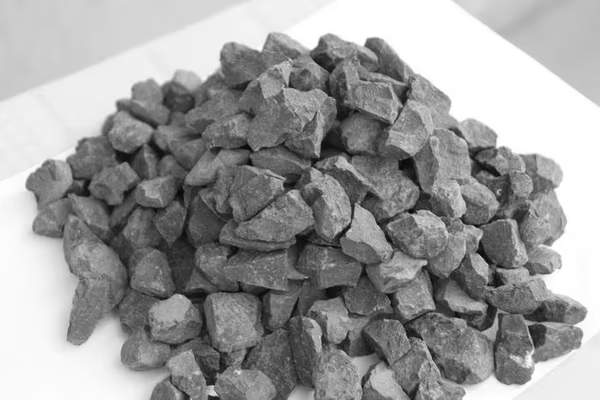
- Use water-wise hardscape. Decomposed granite, rock, and boulders replace large irrigated areas.
Water-Wise Materials and How to Use Them
| Material | Best use in a xeriscape |
|---|---|
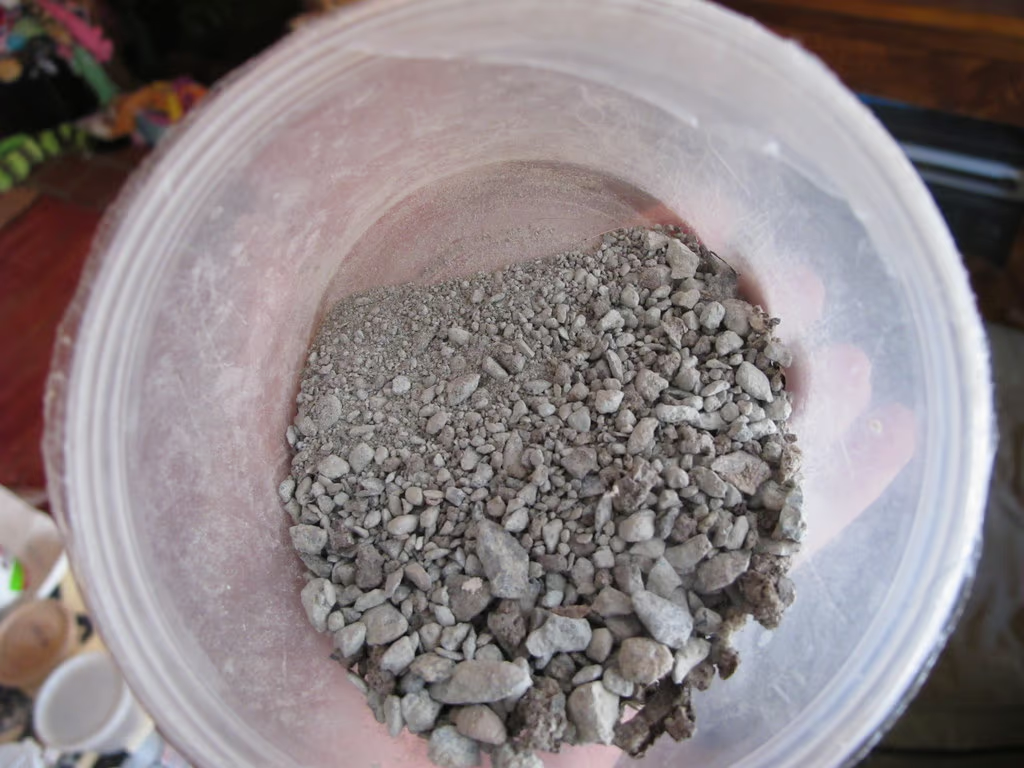
| Decomposed granite | Natural-looking paths, patios, and seating areas |
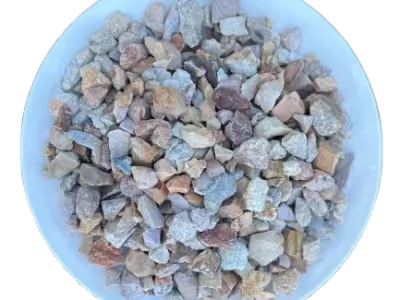
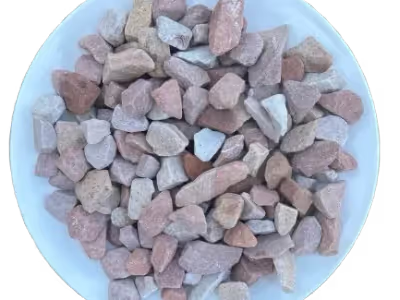
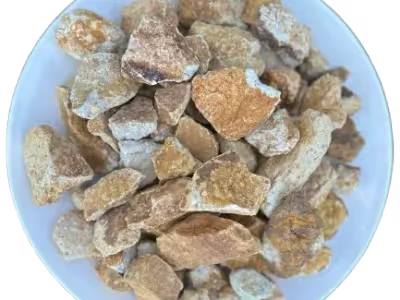
| River rock & gravel | Decorative beds, dry creek beds, drainage |
| Landscape boulders | Focal points, height, and structure |
| Cobbles | Borders and erosion control on slopes |
| Bark mulch | Moisture retention in planting beds |
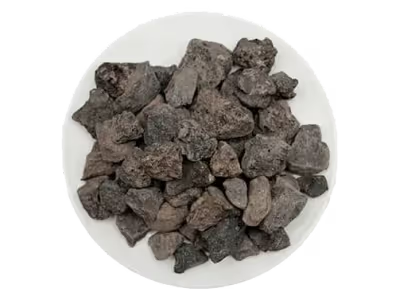
| Lava rock | Lightweight, fire-safe accent around fire features |
Shop these on our Decorative Rocks and Bark & Wood Chips pages.
Design Ideas That Work Here
- Replace the front lawn with a DG path winding through drought-tolerant plantings and rock beds.
- Add a dry creek bed that doubles as drainage and a focal feature.
- Anchor with boulders, burying the bottom third so they look natural, in clustered, odd-numbered groups.
- Create a fire-safe zone of non-combustible rock in the first few feet around the house (see mulch vs. rock).
- Consider artificial turf for a small green play area without the water bill—compare in sod vs. artificial turf.
Avoid These Mistakes
- Bare gravel everywhere ("zeroscaping"). It looks stark and radiates heat—keep plants layered in.
- Skipping soil prep and mulch. Even tough plants struggle to establish without it.
- No weed barrier or edging under rock. You'll fight weeds and migrating stone—see weed barrier.
- Overwatering new plantings. Water deeply but infrequently to encourage deep roots.
How Much Material Will You Need?
Use (length ft × width ft × depth inches) ÷ 324 to size rock, DG, and mulch—about 100–160 sq ft per cubic yard at 2–3 inches. Our material estimator and how-much-rock guide make it easy, and bulk delivery is the economical way to go for a full yard transformation.
Related Resources
- Xeriscaping, Decomposed Granite, and Mulch glossary entries
- Using Decomposed Granite for Landscaping
- How to Build a Dry Creek Bed
- Mulch vs. Rock · Sod vs. Artificial Turf
- Shop Decorative Rocks and Bark & Wood Chips
Conclusion: Beautiful and Water-Wise
A great Placer County xeriscape layers improved soil, efficient irrigation, drought-tolerant plants, and water-wise materials like DG, rock, and mulch. The result is a yard that shrugs off drought, cuts your water bill, and looks designed—not deprived.
Ready to plan yours? Contact us or call (916) 783-9177. We'll help you choose materials and deliver them across Roseville and Placer County.