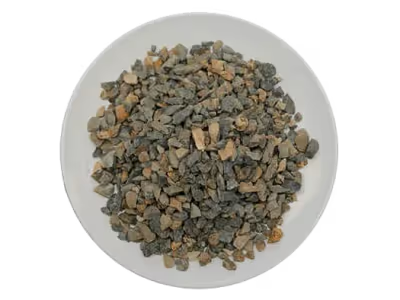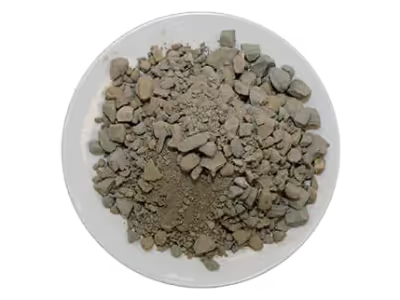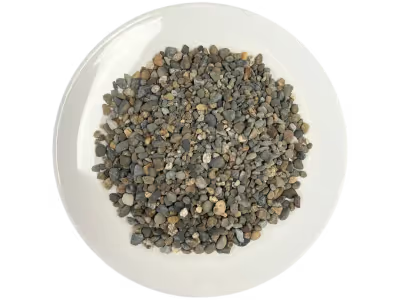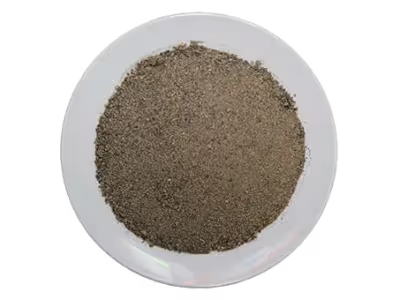
Base rock and drain rock look similar in the yard, but using the wrong one can ruin a patio or flood a foundation. The key difference in one sentence: base rock contains fine particles so it compacts into a hard, stable foundation, while drain rock is washed clean of those fines so water flows freely through it. Base rock is for support; drain rock is for drainage. They do opposite jobs.
Here's how to tell them apart and choose correctly for patios, driveways, retaining walls, and French drains.
Key Takeaways
- Base rock = fines + angular stone → compacts into a hard, load-bearing layer.
- Drain rock = clean/washed stone → open voids carry water away.
- Use base rock under pavers, patios, driveways, and concrete.
- Use drain rock in French drains, behind retaining walls, and around foundations.
- Never swap them: drain rock won't support; base rock won't drain.
The Core Difference: Fines vs. Clean
The single property that separates these materials is whether they contain fines—the dust and small particles between the larger stones.
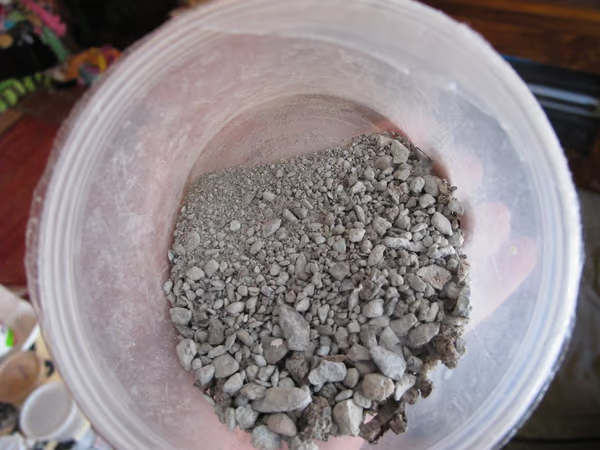
- Base rock is engineered with a graded mix from about 3/4 inch down to dust. When moistened and compacted, those fines fill the gaps and lock everything into a dense, hard layer. It's often called Class 2 aggregate base or "3/4 minus."
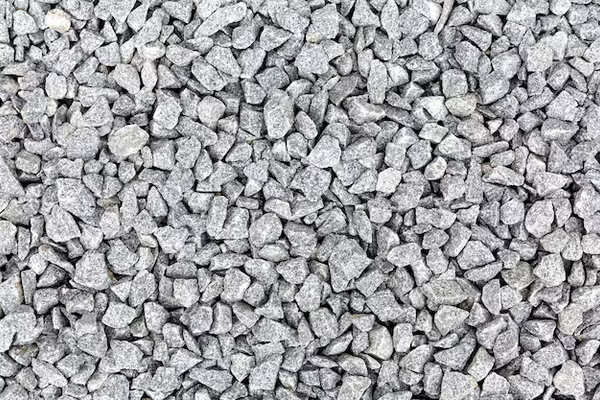
- Drain rock is washed to remove fines, preserving 30–40% open void space by volume. Water moves through those voids quickly—exactly what you want around a drain.
| Base Rock | Drain Rock | |
|---|---|---|
| Contains fines? | Yes | No (washed clean) |
| Compacts? | Yes, into a hard base | No, stays loose |
| Water flow | Blocks it | Carries it through |
| Common sizes | 3/4" minus (Class 2) | 3/8", 3/4", 1–1.5" |
| Use for | Bases & foundations | Drainage |
When to Use Base Rock
Question: What is base rock used for?
Direct answer: Base rock is the compacted foundation layer under anything you build—paver patios, walkways, driveways, and concrete slabs.
A properly compacted base is the single most important layer in any hardscape. It prevents the cracking, settling, and heaving that ruin patios and driveways. Place base rock in 2–4 inch lifts, dampen lightly, and compact each lift with a plate compactor before adding the next. Plan on roughly 4 inches of compacted base for patios and walkways, and 4–6 inches or more for driveways. See our guide on preparing a base for pavers and turf for the full process.
When to Use Drain Rock
Question: What is drain rock used for?
Direct answer: Drain rock moves water away from where you don't want it—in French drains, behind retaining walls, under foundations, and in dry wells.
Because it's washed clean, drain rock keeps its voids open so water can flow. The classic use is a French drain: a sloped, fabric-lined trench with a perforated pipe, backfilled with clean drain rock. This matters in Placer County's heavy clay soils, which hold water after winter rains and can threaten foundations and plant roots. Common sizes are 3/4 inch for general drainage, 1–1.5 inch for high-flow drains, and 3/8 inch for finer fill. Always wrap the rock and pipe in filter fabric so surrounding soil doesn't silt in and clog the system.
The Costly Mix-Up to Avoid
The most common (and expensive) mistake is using the wrong rock:
- Drain rock under pavers → it never locks together, so the surface settles, ruts, and shifts.
- Base rock in a drain → the fines pack tight and trap water, defeating the drain entirely.
If you remember nothing else: fines for foundations, clean for drainage.
How Much Do You Need?
Both are sold by the cubic yard. Calculate with (length ft × width ft × depth inches) ÷ 324, then add a little extra for base rock since it loses volume when compacted. Our material estimator walks through the math, and our calculator does it instantly. For most projects, bulk delivery beats bagged on price.
Related Resources
- Base Rock, Drain Rock, and Crushed Rock glossary entries
- How to Build a Dry Creek Bed (and French Drain basics)
- How to Prepare a Base for Artificial Turf or Pavers
- How Much Rock, Gravel, or Mulch Do I Need?
- Shop Aggregates & Sands · 3/4" Crushed Rock
Conclusion: Pick by Purpose
Choose base rock when you need a hard, stable foundation, and drain rock when you need water to move. Getting this right the first time saves you from cracked patios and soggy yards down the road.
Not sure which spec your project calls for? Contact us or call (916) 783-9177—we'll point you to the right material and deliver it across Roseville and Placer County.